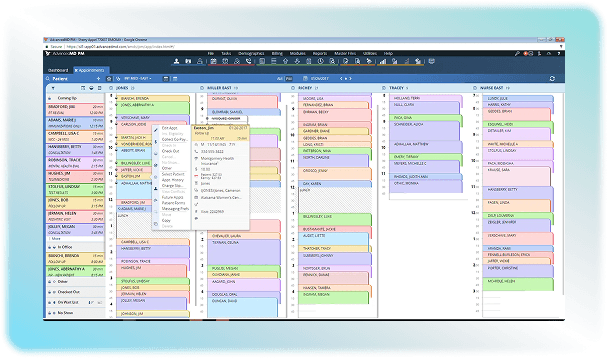
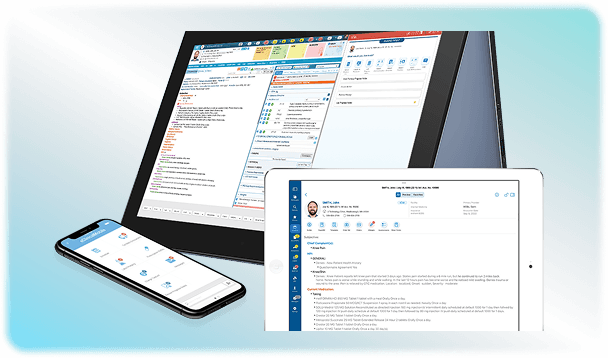
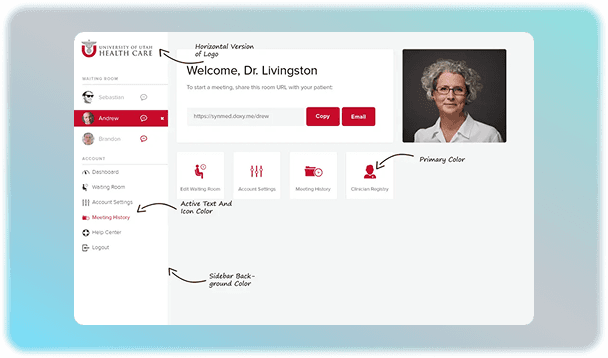
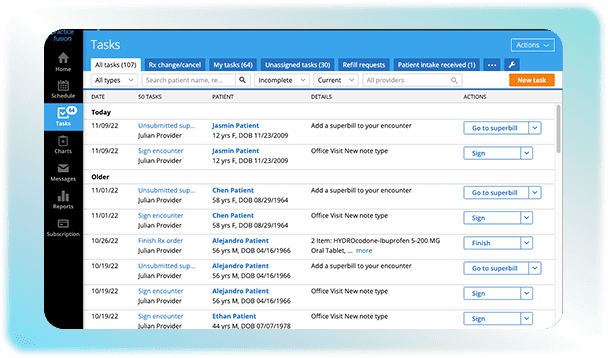
Electronic medical records and electronic health records that incorporate AI to streamline the operations of healthcare practices have some common features that make them dynamic and assistive tools. These include:
Ambient AI Scribes
The interaction between the doctor and patients must be carried out with full focus. Ambient artificial intelligence, such as eClinicalWorks AI scribe, is known for its accurate note-taking. They facilitate uninterrupted interaction by listening to the conversation and generating accurate notes in different templates such as SOAP. This prevents the doctor from being inattentive to patients when they are busy typing.
Smart Coding
AI models analyze clinical documentation as it is written, which is why they suggest accurate ICD-10 diagnosis codes and CPT procedure codes. This reduces manual searches and also helps prevent billing errors.
Automated Patient Intake
Patients usually fill out the intake forms digitally, which allows the AI EMR software to check the text they have added. It extracts relevant details like allergies, past surgeries, and active medications. These details are then piped into the correct sections of the chart, so that
Intelligent Chart Summaries
It can take a lot of time to review a patient’s history from the absolute start. Specialized EHR software has AI capabilities that can read the details and generate quick summaries for practitioners to review. Tools like Oracle Health Clinical AI give a quick summary of the important information, like historical clinical data or recent laboratory results.
Benefits Of Using AI EMR EHR Software for Healthcare Practices
Small clinics and independent practices operate with limited staff most of the time. AI electronic medical record solution helps make the most of the limited resources. The advantages of using these platforms include:
More Focused Time With Patients
Doctors no longer have to divide their attention between listening to patients during the session and taking notes at the same time. AI scribes provide them with notes through software like athenaOne, so that they can focus on the patient. This attentive interaction also boosts the patient experience.
Faster Reimbursements
Insurance claims usually get rejected due to small coding mistakes. AI coding tools act as an automated claim scrubber that checks for errors or manual mistakes before submission. This ensures fewer insurance denials and faster cash flow for the business.
Less Admin Burnout
The pace of workflow in healthcare practices can be improved by incorporating AI in daily operations. These software tools help with patient scheduling and send automated reminders to make sure the chances of cancellation are as low as possible. They can also streamline tasks by pulling the exact clinical records required by an insurance provider and auto-populating the authorization forms for submission.
Important Security And Compliance Factors
The adoption of AI in medicine requires attention to safety and privacy rules according to legal and regulatory authorities. High standards must be maintained across all systems to make sure sensitive data like medical histories, prescriptions, diagnostic results, and clinical notes are not breached.
HIPAA Compliance
You must check whether the software you pick complies with guidelines issued by the Health Insurance Portability and Accountability Act because it is important that patient data remain protected. AI systems must encrypt data both while it travels across the internet and when it is stored on cloud servers. Compliance is ensured by using standards like AES-256 at rest and TLS 1.3 in transit.
Business Associate Agreements
AI software vendors that deal with patient health information on behalf of a medical practice are considered Business Associates under HIPAA rules. The practice must sign a Business Associate Agreement, or BAA, with the vendor before sharing patient data. This agreement explains how the vendor must protect patient information and keep it secure. It also outlines what the vendor must do if a data breach occurs. The use of AI EHR software without a required BAA can put a medical practice at risk of data breaches, legal issues, and financial penalties.
How To Choose The Best AI EMR/EHR Platform?
The use of AI in EMR should not be your sole criterion to pick a software. You must evaluate and compare how well those artificial intelligence features fit the daily operations of your healthcare practice. The clinical workflows, staffing, budget, and current technology you are using play an important part in making the right choice.
Pricing
AI software pricing varies depending on whether you choose an ambulatory cloud platform, an enterprise hospital solution, or a free tier. Practices need to watch out for the hidden costs that affect the budget. The free AI EMR/EHR platforms usually offer access to some basic tools and features. Advanced capabilities are available most of the times available in paid features only.
Integration Capabilities
AI EHR solutions have to exchange important information such as lab results, pharmacies, invoicing, and patient portals. Prioritize platforms built on modern Fast Healthcare Interoperability Resources APIs and HL7 data layers. They help you connect with the current technology running different operations of your medical centres.
Ease Of Use
The staff and practitioners must be able to use the software if you want to achieve the best results. You have to ensure that the interface of the solution is simple to learn and operate so that it can be deployed easily. For ambient tools, choose the option in which you do not have to manually enter the details. Also, check out the features available in the dashboard to ensure that you can access them without any hassle.
Contact Us Now
Get in touch with the expert team at Software Corporates or take a look at the best AI EMR EHR platforms list. We will help you shortlist the most suitable software that can increase the pace of the workflow of your healthcare practice.